Finding the Perfect Fit: A Guide to Choosing the Right Childcare Center

As a parent, one of the most important decisions you’ll make is selecting the right childcare center for your child. It’s a choice that can significantly impact your child’s well-being and development. Let’s explore the key factors to consider when choosing the perfect childcare center.

Childcare Selection Tips Choosing childcare begins with careful research. Seek recommendations from trusted sources, such as friends or family, and read online reviews. Visit potential centers to get a feel for the environment and meet the staff. Create a checklist of your priorities, such as location, hours, and curriculum, to help you narrow down your options.

Quality Childcare Centers Quality matters above all else when it comes to childcare. Look for centers that prioritize safety, cleanliness, and a nurturing atmosphere. A high-quality childcare center will have trained and experienced staff who engage children in age-appropriate activities that stimulate their growth and development.

Finding the Best Preschool If you’re looking for a preschool program, consider a center that offers a structured curriculum that aligns with your child’s developmental needs. A well-rounded preschool will focus on early literacy, math, social skills, and creative expression. Visiting classrooms and speaking with teachers can give you insights into the educational approach.

Daycare Center Criteria For daycare services, it’s essential to ensure the center can accommodate your child’s daily routine and dietary needs. Inquire about their policies on naps, meals, and hygiene practices. A good daycare center should provide a safe and comfortable environment that feels like a second home for your child.

Childcare Center Evaluation After your child starts attending a childcare center, maintain open communication with the staff and regularly assess your child’s progress. Evaluate how well the center aligns with your child’s developmental milestones and whether they are happy and thriving in their care.

In conclusion, choosing the right childcare center is a pivotal decision that requires careful consideration. By following these tips and prioritizing quality, you can ensure that your child receives the best possible care and early education experience.

#ChildcareSelection #QualityChildcare #PreschoolSearch #DaycareCriteria #ChildcareCenterEvaluation #ParentingTips

Unlocking Potential: The Profound Benefits of Early Childhood Education

In the journey of nurturing young minds, early childhood education stands as the first stepping stone. Its impact resonates not only in the formative years but throughout a child’s life. Let’s delve into the multifaceted benefits of early childhood education.

Early Education Advantages
Early education offers a head start in cognitive development, equipping children with essential skills for future academic success. For instance, programs that emphasize language skills can help children excel in reading and writing from a young age, setting them on a path to becoming confident communicators.

Child Development Benefits
The benefits extend far beyond academics. Early childhood education fosters social and emotional development. For instance, through interactive group activities, children learn how to collaborate, resolve conflicts, and express their feelings effectively. These skills lay the foundation for strong relationships throughout life.

Preschool Education Impact
Preschool programs provide a structured environment for learning and exploration. For example, a well-structured preschool curriculum can introduce children to basic math concepts through playful activities, helping them develop early numeracy skills that serve as building blocks for future math proficiency.

Early Learning Advantages
Early learning encompasses a wide range of subjects, including science and the arts. For instance, science experiments tailored to young children can instill a love for discovery and critical thinking. Early exposure to the arts, such as music and painting, ignites creativity and self-expression.

Importance of Kindergarten Readiness
Kindergarten readiness ensures a smooth transition to formal education. For example, children who have had exposure to pre-reading activities and basic math concepts are better prepared to engage with the kindergarten curriculum. They tend to experience less academic stress and adapt more easily to new environments.

In conclusion, early childhood education is a powerful tool for unlocking a child’s potential. It shapes the future by nurturing young minds, fostering holistic development, and preparing them for the exciting journey of learning. By providing your child with early education, you’re investing in their bright future.

EarlyChildhoodEducation #ChildDevelopment #PreschoolBenefits #LearningAdvantages #KindergartenReadiness #ParentingTips

Educational Benefits of Visiting the Aquarium

We recently visited Adventure Aquarium, in Camden, New Jersey, and it sparked an interesting conversation on the educational benefits of children visiting an aquarium while in Pre-K or younger! Continue reading to learn more about the educational benefits of visiting an aquarium!

1. Learning about marine life: Visiting an aquarium can help children learn about different types of marine life and their habitats. They can observe the animals and learn about their behaviors, diets, and adaptations.

2. Science education: Aquariums offer an interactive and engaging way for children to learn about science concepts such as biology, ecology, and environmental science.

3. Encouraging curiosity: Aquariums can inspire curiosity and a love of learning in children. They may ask questions and seek answers about the animals they see and the environment they live in.

4. Promoting conservation: Aquariums often have exhibits and programs that promote conservation and teach children about the importance of protecting marine life and their habitats.

5. Hands-on learning: Many aquariums offer hands-on activities such as touch tanks, where children can touch and interact with marine animals, which can help them learn about the animals in a more tactile and engaging way.

6. Multisensory learning: Aquariums offer a multisensory learning experience, with sights, sounds, and even smells that can help children learn about the ocean and its inhabitants.

7. Cultural education: Some aquariums have exhibits that showcase the cultural significance of marine life in different parts of the world, which can help children learn about different cultures and traditions.

8. Improving vocabulary: Visiting an aquarium can help children learn new vocabulary words related to marine life and the environment, which can improve their language skills.

9. Inspiring creativity: Aquariums can inspire creativity in children, as they observe the colors, shapes, and patterns of different marine animals and habitats.

10. Creating memories: Visiting an aquarium can create lasting memories for children, as they learn about new things and have fun exploring the exhibits.

The Importance of Early Childhood Education

Early childhood education is a critical component of a child’s development, as it helps to provide a foundation for lifelong learning. During the first few years of life, children’s brains are rapidly developing, and early education can help to shape their cognitive and social-emotional skills. Children who receive early education are more likely to succeed in school and in life. They develop better language skills, problem-solving abilities, and social skills. Early education also helps children to develop a love of learning that can last a lifetime.

One of the primary benefits of early childhood education is that it helps to foster cognitive development. Young children’s brains are like sponges, and they absorb information at an incredible rate. Early education can help to provide children with the tools they need to develop critical thinking, problem-solving, and decision-making skills. These skills will serve them well throughout their academic and professional careers.

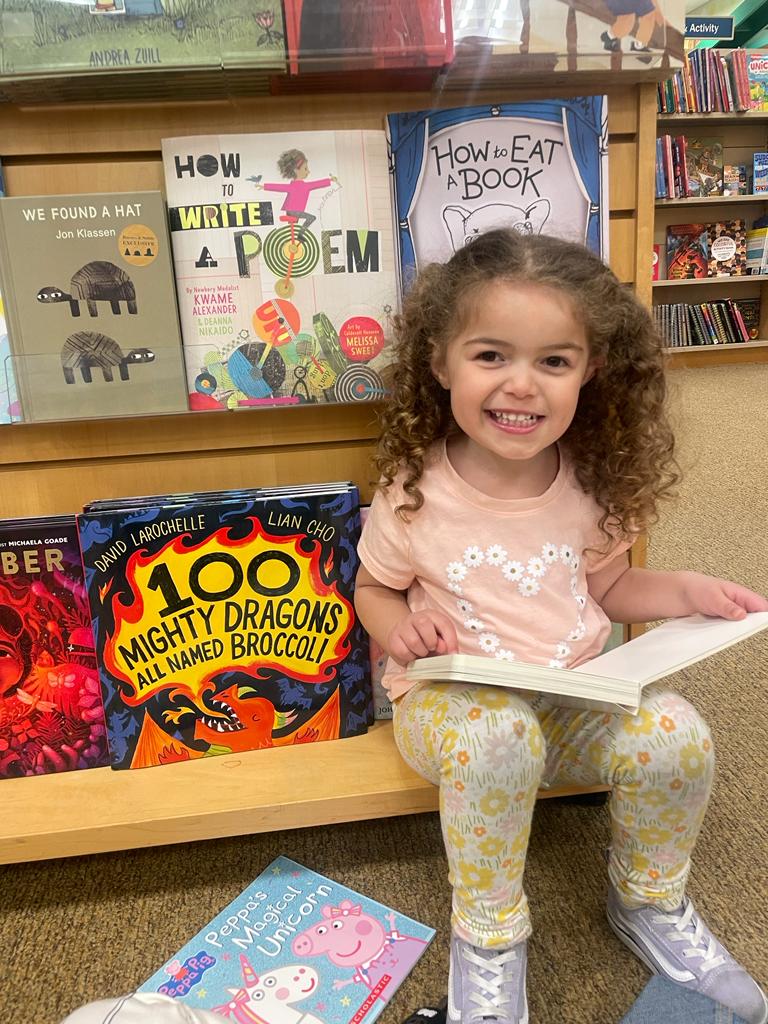
Reading = Fundamental

In addition to cognitive development, early childhood education also plays a crucial role in social-emotional development. Young children are still learning how to interact with others, and early education can help them to develop social skills like communication, empathy, and cooperation. These skills are essential for building healthy relationships and functioning in society.

Parents and caregivers can play a crucial role in a child’s early education by reading to them, providing a stimulating environment, and engaging them in educational activities. By investing in early childhood education, we can help to set children on a path to success. It’s never too early to start learning, and every child deserves the opportunity to reach their full potential.

Early childhood education is an investment in our future. By providing children with the tools they need to succeed, we can help to ensure that they have a bright future ahead of them. Whether it’s through formal education programs or simply engaging with children in educational activities, we can all play a role in fostering the cognitive and social-emotional development of young children. By investing in early childhood education, we can help to build a better world for generations to come.

Benefits of Play-Doh

Any Early Education teacher can attest to this statement: play-doh play is every child’s one favorite activity in the class! And as engaging as this activity is, there are also a multitude of benefits while playing with play-doh:

Enhances fine motor skill
As a child is playing with play-doh, they are rolling, flattening, squishing, shaping the play-doh, or even cutting it, which allows them to develop & strengthen their hand muscles, which in turn helps to improve fine motor skills of your child.

IMG-20200605-WA0045

Improves pre-writing skills
Yes! This is very true! While playing with play-doh, your child’s pincer grip (the action of squeezing the pointer finger and thumb to grasp an object) improves. By improving this, it also works to enhance your child’s pre-writing skills!

Creativity and imagination
There is no denying that play-doh play gives your child unlimited possibilities of molding the dough into whatever they imagine – food, animals, objects, and more! Therefore, it encourages your child to use their imagination and further inspires his or her creativity. By using the different shaping tools, it also further enhances their creative imagination.

IMG-20200605-WA0043

Calming effect
Engaging with play-doh is also proved to have “calming effects,” for children. It gives them an avenue to express their emotions or calm themselves down if they are restless. Allow your child to sit in a quiet place, with their play-doh, and you will see the soothing effect on he/she!

Develops hand-eye coordination
By using a variety of shapes and play-doh tools while playing, it will work to improve your child’s hand-eye-coordination!

Social skills
With any activity children engage in, social skills are always at the forefront! While engaging in play-doh play, opportunities to interact, talk, discuss problems and find solutions to creating great works of art and craft with play dough. Thus, playing with play dough will enhance your child’s social skills.

IMG-20200605-WA0037

Increases curiosity and knowledge
Curiosity & knowledge go hand-in-hand with anything children do! So, imagine…when they are playing with play-doh and mixing two (2) different colors together, they suddenly see it makes a new color! Or imagine when they mold the dough into different shapes – this strongly encourages their curiosity and will cause your child to ask a variety of questions which would help increase I his/her knowledge.

* *

Thinking of adding more play-doh items in thee playroom now? Here are some of our favorite items! First, you need a good set of play-doh, and we suggest the, “Play-Doh Modeling Compound 24-Pack Case of Colors.” It’s a good variety of colors, and you can mix colors to make new ones too! And the “Play-doh Fun Tub,” is also a good thing to have – it allows your child to explore different shapes & cut-outs, and also enhances their fine-motor skills. We also suggest a “tool kit,” to use; this also emphasizes the fine-motor aspect of play-doh play, while allowing your child to cut out different patterns, and make different textures with the squeeze tubes!

Cooking at Home is Cross-Curricular!

Did you know that cooking with your child can boost their development? It’s a simple activity, one can do at home, which touches on multiple learning areas. Here are just some of the benefits of doing a cooking activity with your child:

  • Increases Language Development
  • Enhances Fine Motor Skills
  • Increases Math Ability
  • Improves Reading Skills
  • Introduces Kids to Scientific Concepts
  • Increases Focus and Attention
  • Teaches Life Skills
  • Promotes Healthy Eating

One of our Preschool students, Anthony, loves to help his mom in the kitchen, and it’s a great cross-curricular moment as well.

Screen Shot 2020-04-26 at 1.06.26 PM

Here we see Anthony, helping his mom your one of the ingredients they are using to make the cupcakes. By doing so, he is focusing on his fine-motor skills, and also practicing the idea of “sequencing,” so he knows which step is after another. By using the measuring cup, we are also able to incorporate “math” and talk about the quality of the item going into the eggs.

Language skills are also focused on while cooking, because we can talk about different items, how they are pronounced, and one can even practice spelling them out, and identifying the letters in the main ingredients afterwards.

Just in a simple activity of baking cupcakes, we are also able to talk about science as well, because we can see how the cupcakes look before baking, and talk about how it changes once out of the oven.

Share your cooking at home activities with us, by using #ElliesAcademy when posting on social media!

Screen Shot 2020-04-26 at 1.06.16 PM

Activities While Home!

In light of recent news, many parents, across the country, are working from home, and trying to find ways to keep their smaller children engaged at the same time. We wanted to put together some activities, which we’ve come across over the years, that can keep the learning on while at home!

Sticker Line-Up
This simple activity uses white butcher paper, and dot stickers. Roll out about 3 feet of the white butcher paper, and then draw a combination of zig-zag, curly, loopy, and swirly lines down the paper.

The goal of this activity: to focus on fine-motor skills, tracing, counting, and patterns

By doing this activity, any toddler or preschool-age child is not only engaged for a good amount of time, but we’re able to talk about colors, shapes, patterns. A parent can start the patterning by putting down certain colors down, and then explaining to the child what to do next.

* * * * * * * * * * * * * * *

Sort & Drop with LEGO Bricks
This is a nice & simple activity which I had come across during my teaching years. And the materials are also items you’d find around the house: easel paper, packing tape, box, knife, scotch tape, colored sharpies, and LEGO bricks.

I had found an Amazon box, and covered the top with the easel paper and taped the paper in place. Once you cover your box, make five squares into the top of the box and taped the edges around squares so that they don’t easily rip. Finish by outlining each square with a different color!

Now it’s time to get your Toddler, Preschooler or Pre-K child up and around the house, having them search for all of their LEGOs. Then sit with them and ask them to find the red LEGO and drop it into the cut out of the red square. As you do this, you can discuss the shapes and sizes of each one. Use words/phrases like “bigger than” or “smaller than,” when talking about the different LEGOs.

Once done, you can always turn this into an extension math project, and talk about graphing! Dump out all the LEGOs, and then count how many of each color are there. You can use this graph paper, to color in the number of squares for each color LEGO there is. And by doing so, the children are able to visualize, in a different way, which colors were “more than”, or “less than,” the other.

* * * * * * * * * * * * * * *

Golf Tee Push
For any busy child, keeping them actively engaged is a task in its own. But this activity only takes seconds to do, and it’s a great one which focuses on fine-motor skills, hand-eye coordination, and spacial awareness.

Find any old box, and add a few holes into it. Give them the golf tees, and allow their independence to flourish! Once all the tees have been put into the holes, you can discuss math by counting the number of tees he/she was able to push, and then also color recognition. If you have an older child at home also, join them into the fun and have them discuss quantities, and practicing writing the colors and numbers.

* * * * * * * * * * * * * * *

Money Hunt
This activity is perfect for your Preschooler or Pre-K child! You can use real coins if you like, but we suggest to use this – so even if they get lost (or stuck in the sofa), it’s not a big deal 🙂 Place the coins out in a plastic tray, which you can find at the Dollar Tree or may even have at home! then cover the coins with fun (colored) rice; (this is yet another great activity you can do also!)

Now give your child some useful “tools,” so they can look for their treasure! Some of these will also play into fine-motor skills, depending which items they choose to use when searching.

As the children are searching and finding coins, they can sort the into smaller containers. (Sorting = math!!!)

* * * * * * * * * * * * * * * 

Vibrant Colored Rice
This is something a child, of any age, would have a great time doing! For this simple activity you would need white rice, hand sanitizer (fruit-scented is nice!), a few toothpicks, and then mason jars! I would also suggest that if you’re doing this with a Toddler or even Preschooler, to use a funnel. Inside the mason jars, add a few squeezes of sanitizer, then added gel dye, and toothpick.

Fill a larger bowl with rice and then ask your child to pour about 1 cup into each. (For your older child, you can discuss measurements and quantities as well!) Close the jars tightly, and then let your child shake everything up. You will see that the color is spreading onto the rice inside the jars.

Once all the jars are mixed together, you can pour then onto a baking sheet and make a beautiful rainbow, and then slow transfer it into a sensory bin, so they have this to use for quite sometime!

* * * * * * * * * * * * * * * 

If you work on any of these at-home activities, we would love to see your child in action!

Product vs. Process Art

Product versus process art has always been a battle that many early educators have been fighting within their classroom! So what are the differences between these two types of art forms:

Product-art is when the child begins a project and knows exactly what the end product should look like; and moreover, they are following a distinctive set of directions, in order to get to their final product. When one does this type of art, there is a right & wrong way to do things.

Process-art is when a child has an open-ended project, alongside the opportunity to creatively express themselves through their work. The end product is solely based on the child’s discovery, uniqueness and their individual creativeness.

To dive in a bit deeper on this topic, let’s see how NAEYC (The National Association for the Education of Young Children) view process-focused art and its characteristics:

  • There are no step-by-step instructions
  • There is no sample for children to follow
  • There is no right or wrong way to explore and create
  • The art is focused on the experience and on exploration of techniques, tools, and materials
  • The art is unique and original
  • The experience is relaxing or calming
  • The art is entirely the children’s own
  • The art experience is a child’s choice

Children, my all means, should be given the tools to do a project or accomplish something; but how they do it is key in the field of Early Education. Here we see some children in the Preschool classroom, who were shown artwork by Picasso and Van Gogh.

The children, on two different occasions, were given the tools to allow them to paint their own versions of these images.

This slideshow requires JavaScript.

Below are two of the children, proudly showing off their work:

As you can see, each child’s final paintings are completely different than the originals they were shown; however, it expresses their individual creativity and talents. And that, readers, is the difference between product-art and process-art!

Playing Cards in Preschool!

We’ve all played the classic games: Go Fish!,  Solitaire, Rummy.

But did you know that when children play these games, they encompass numerous educational aspects also! Today, we popped into our Preschool classroom, where Miss Gina had her students in different centers. Some were playing with manipulative, some were engaged in board-games, and the rest of them were grouped at a table playing Uno!

Screenshot_20191108-103308_Gallery

Here, one of our Preschoolers, Charlotte, is seem playing Uno! (And we absolutely love how intense and into the game she was!) But at the same time, here are the educational aspects with this family-fun, card-game:

Cognitive Skills:
When engaging in a card game, one’s cognitive skills are triggered in multiple ways: from memorization to matching, number & pattern recognition, and these also increase, depending on the complexity of the game. As card-games become more intricate and difficult, it allows children to utilize their intellect more in providing solutions and in finding new ways of winning.

Emotional Intelligence:
A simple card-game can indeed go a long way when it comes to one’s emotional health. Small children interact with their teachers & peers, in a familiar environment and they are encouraged to take part in friendly competition. When playing such card-games, the end goal of achieving a win is as important as learning to understand and manage a loss.

Patience and fair-play can be developed or taught from early ages and card games are extremely useful means for it. All card games require communication; therefore children have to talk to each other, to negotiate or comprehend the rules, to take turns and to challenge each other. 

Games, such as Uno, also teach children very important social skills, such as:

  • Verbal communication
  • Sharing
  • Waiting
  • Taking turns
  • Group interactions
  • Numbers
  • Color recognition 

The next time you sit down for “family game night,” think of all the amazing educational opportunities you are  providing your little one with!

Importance of Literacy

​As early childhood professionals, we have recognized the importance of language and literacy in preparing children to succeed in school. It is because of this very reason that literacy is infused in every age-group’s, especially for Infants. Children who are exposed to books at an early age begin to imitate the language & gestures their parents and teachers use while sharing stories. This could be the way they turn pages and sometimes even them murmuring (which is indirectly an early verbal skill), as they “read” the pictures.

*

Developing language and literacy skills begins at birth through simple interactions, such as sharing books, telling stories, singing songs and talking to one another. In our Infant classroom, the children are able to build a relationship with books, learning how to hold them, and developing their fine-motor skills as they turn the pages. These are all emergent skills when it comes to literacy.

*

Research has shown that within the first 18 months of an infant’s development, start to show an understanding of pictures which will represent items in the real world, (source: Barton & Brophy-Herb 2006). As the infant grows to become a toddler, when they re-read and re-listen to a book which they’ve read since they were a tiny baby, they start to imitate actions from the book. When this child starts to comprehend the pictures which they see in the book to real-world objects it is the beginning of their literacy development.

Importance of Literacy in Early Education

*

No child is too young to be spoken to and read to. It is beyond important that both parents and teachers of these young infants should read & speak to them at every opportunity possible. Even when you are changing a diaper, you should be speaking to the child. When you are laying them down in the crib, take this as an opportunity to sing to them. Whenever we speak to these young children, the words, phrases and songs sit in their subconscious.